
Integrating 'The Core' into Your Practice.
Unlocking and accessing a Deeper Understanding.
This online class is intended to help you not just learn—but truly embody—the practical knowledge I've gathered and refined over 40 years. The goal is for this understanding to become second nature, seamlessly guiding your hands and intuition as you apply corrective massage.
When you absorb this information deeply, it doesn't just stay in your head—it becomes part of your muscle memory, ready to surface when you need it.
Those who have watched me work in real-time often notice how I frequently access what appears to be an unseen guide. When asked, I usually call it accessing my crystal ball—a deeper knowing that transcends technique alone.
This could be called a 'Rolodex of Knowledge,' but it's bigger than that, it's about something more fluid, intuitive, and alive.
This online class is your opportunity to cultivate that same level of ability—where knowledge moves beyond thought and becomes instinct.
Presence is the Key.
Being fully present is essential. True learning happens when you engage with the material—not just nod your head. We, as therapists, access through our hands, body, and intuition.
During interactions with clients, our minds reference our internal "knowledge Rolodex" to make sense of the present. But if the information isn't clear, our minds may default to outdated habits or uncertainty, keeping us 'stuck in the past.' This situation can slow our ability to integrate our knowledge with our techniques and intuition.
This online class helps update your internal Rolodex, ensuring that what you learn here is readily available in real-time when you need it most—at the massage table.
My Intention is Not About Memorization.
You don't need to force this information into your mind. Instead, simply watch, read, and let it sink in.
- Find it – Recognize the patterns in the body.
- Feel it – Develop the sensitivity to understand what's happening beneath your hands.
- Fix it – Apply your knowledge with confidence and precision.
Let the learning process be organic. With time and presence, this knowledge will integrate seamlessly into your work, enhancing your ability to bring balance, relief, and transformation to those you help.
</Class focus: 'Tactile feel.'
With preparation before class, you can be more present during class.
This will enhance the ability of your nervous system to comprehend and process the sensations your hands experience.
Knowledge and understanding support and enhance your sensory perception.
Combining the tactile feel experienced during class with this information can create a powerful approach to getting the most out of this class.
Our sense of touch involves interpreting and directing us.
This ability increases when supported with knowledge and understanding.
Taum will include this information within your handout for your future reference.
All of these tissues influence the Lower Back and Hips:
- SI Joint Cartilage,
- Quadratus Lumborum,
- Ilio-Lumbar Ligament,
- Iliocostalis Lumborum and Thoracis,
- Multifidi,
- Rectus Abdominis,
- Psoas,
- Vastus Lateralis,
- Biceps Femoris,
- Gluteal muscles,
- Sacrotuberous/Sacroiliac Ligaments.
Familiarize yourself with the following information.
I suggest you begin with 'Do you remember...'
Do you remember how our bodies were once more efficient at self-healing? This analogy may help you understand.
Muscular skeletal homeostasis: The Bodies GPS.
Musculoskeletal homeostasis is simply the body's constant drive for balance and adaptation.
The Car's GPS:
- Goal-Oriented Navigation: GPS is designed to guide the car to a specific destination. If the route changes due to traffic, detours, or road closures, the GPS recalculates and adapts the path to stay on course.
- Constant Adjustments: The system continuously monitors the car's position and provides real-time corrections to ensure the car stays on track.
- Compensation for Errors: When the driver veers off the suggested path, the GPS compensates by recalculating, sometimes leading to longer, less efficient routes.
Musculoskeletal Homeostasis:
- Striving for Balance: The body uses its muscles, bones, and connective tissues to maintain equilibrium, ensuring that posture, movement, and internal processes support optimal function. Like the GPS, it continuously recalculates to achieve this balance. This is called the vestibular righting reflex.
- Constant Adaptation: Muscles, bones, and connective tissues adjust in response to external forces, habitual movements, injuries, or imbalances. These adaptations are the body's way of "re-routing" to maintain functionality.
- Compensation and Tension: Just as a GPS might take a more complicated route to avoid obstacles, the body compensates for structural or functional imbalances by recruiting different muscles or altering movement patterns. This can lead to muscular tension, overuse, and even chronic pain as the body tries to "correct" itself.
The Result:
While the car eventually reaches its destination, repeated recalculations can lead to inefficiencies in the journey. Similarly, the body's continuous adjustments to maintain homeostasis may result in muscular tension and compensation patterns. Over time, these compensatory patterns can disrupt the body's natural equilibrium, leading to discomfort or dysfunction.
This analogy underscores the importance of addressing root causes of imbalance in the musculoskeletal system, just as proactive driving and accurate GPS inputs prevent unnecessary detours.
The core principles of The Berry Method acknowledge, respect, and respond to how muscular adaptations and compensations create an underlying tension that impacts the entire body.
Until core muscular-skeletal balance and homeostasis are restored, the vestibular reflex remains activated. This interferes with various processes throughout the body.
This class focuses on reducing those core muscular adaptations and compensations.
Leg length and balance.
One common core compensation is presented when one leg is drawn up and appears shorter than the other, which may suggest unbalanced core muscle engagement.
Follow along...
The fluidity of your client's movement when lifting and extending their hips provides valuable insights into muscle tension and balance in the lower back and hips.
Assessing Balance in the Lower Back & Hips
When observing your client's movement, key indicators can help determine whether their lower back and hips are functioning in balance or if there are underlying imbalances affecting their mobility.
Controlled, Pain-Free Movement
- If your client can lift and extend their hips smoothly, without stiffness, discomfort, or compensatory movement, this suggests that their lumbar spine, pelvis, and hip muscles are working in harmony.
- If they struggle with pain, tension, or restricted motion, it may indicate tightness, weakness, or an imbalance in the surrounding musculature.
Even Engagement of Hip Extensors
- Ideally, your client's gluteus maximus, hamstrings, and core muscles should activate in a balanced way during movement.
- If their motion appears uneven or shaky, it could suggest muscle imbalances or strength deficits, where one group is compensating for another.
Stable Pelvic and Lumbar Alignment
- A well-balanced movement pattern means the pelvis and lower back remain stable throughout the motion.
- If you notice wobbling, arching, or excessive tilting, it may indicate weakness, tightness, or misalignment in the lumbar spine, hips, or surrounding stabilizers.
Adequate Hip Mobility and Flexibility
- Your client should be able to extend their hips without restriction, which requires flexible hip flexors (psoas, rectus femoris) and strong hip extensors (glutes, hamstrings).
- If they experience limited range of motion or anterior pelvic tilt, tight hip flexors may be restricting their movement, leading to compensations in the lower back.
Core Stability & Coordination
- A well-coordinated core (including the transverse abdominis, obliques, and multifidus) helps keep the lower back stable while allowing fluid hip movement.
- If their core stability is weak, you might notice excessive lumbar movement instead of isolated hip extension.
Possible Imbalances to Watch For
- Uneven movement → May indicate muscle dominance (e.g., hamstrings working harder than the glutes).
- Excessive arching in the lower back → Could suggest weak glutes or tight hip flexors.
- Hip shifting to one side → Might indicate pelvic misalignment or strength imbalance.
By assessing these movement patterns, you can identify where your client may need increased mobility, stability, or strength, allowing you to create a targeted approach to restore balance and improve functional movement.
They also serve as progress measures.
Conclusion
Smooth hip lifting and extension typically indicate healthy balance and coordination in the the lower back and hips.
However, compensations, stiffness, or instability may signal underlying muscle imbalances or movement restrictions.
One common compensation occurs when one leg is drawn up and appears shorter than the other, which may suggest unbalanced muscle engagement.


 The Ilio-Sacro-Lumbar ligaments (more accurately known as the Iliolumbar ligaments and Sacroiliac ligaments) are critical connective structures in the lower back, helping to stabilize the pelvis, spine, and sacrum. They play significant roles in posture, movement, and load transfer across the pelvis and spine.


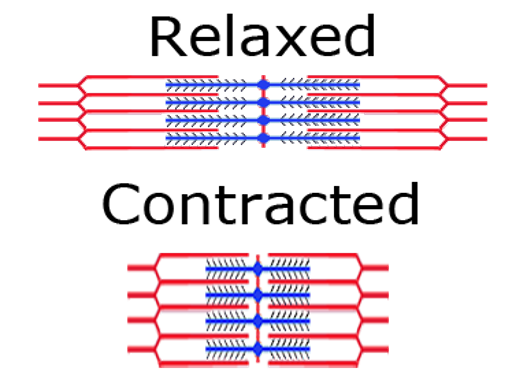
The sarcomere is the basic functional unit of a muscle fiber and is responsible for muscle contraction. It consists of alternating thick and thin filaments that slide past each other to produce contraction.

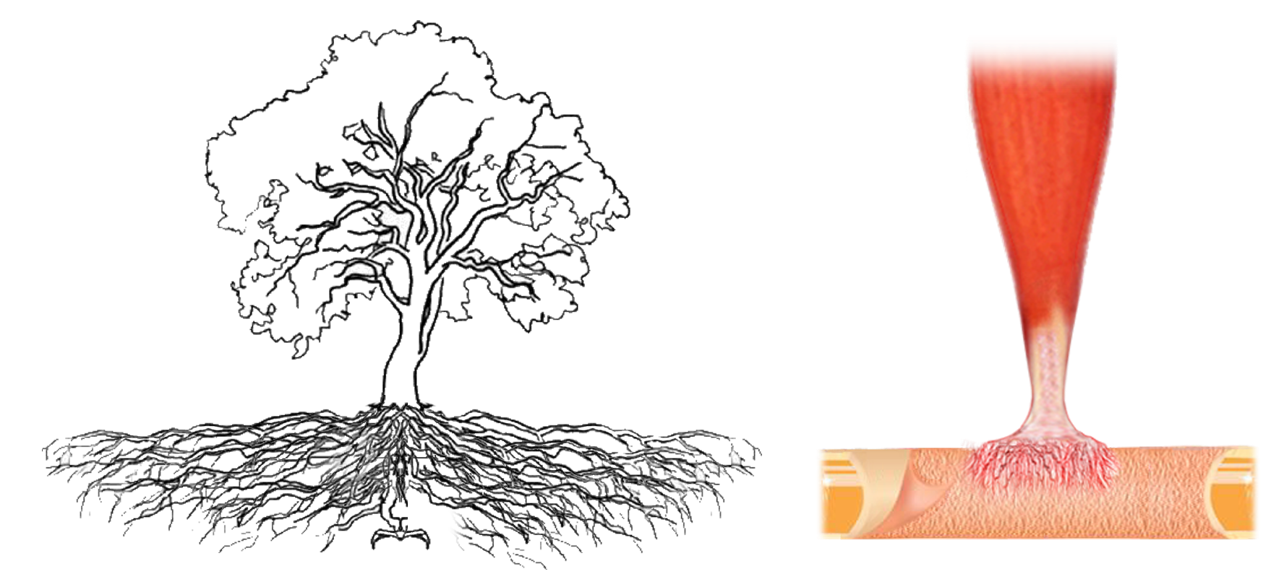


Taum's approach to manual therapy is primarily influenced by the work of Lauren Berry Sr, Registered Physical Therapist and Structural Engineer.
Structural engineering is a sub-discipline of civil engineering. Structural engineers design the 'bones and muscles' that create the form, shape, and function of structures.
They also work with and understand the plumbing systems within those structures.
One of Lauren's many unique gifts to the manual therapy world was the concept of soft-tissue balance and distortion.
This is so appropriate:-)
Click here for more information on Lauren.
A Holistic approach.
It serves to remember that we, as therapists, do not heal anything. We simply recognize, respect, and support the body's 'built-in' healing ability.
Corrective Massage recognizes the importance of balanced relationships, movements, and interactions throughout the body's soft tissues*. These relationships include natural anatomical positions and functionally balanced movement unimpeded by soft tissue tension.
Functional balance implies that our soft tissues are working harmoniously to support pain-free, healthy movement and function.
In Taum's world of Corrective Massage, considering all bodily movement as an orchestration of soft tissue relationships is a fundamental principle and starting point.
These foundational principles include familiarity with Equilibrium and Homeostasis. AKA Balance.
For example: Walking initially appears to be a simple activity. It actually involves a complex orchestration of numerous soft tissues.
A symphony of movement:
Our body requires over 200 of our 600 muscles to take one step. Of those 200, many serve as compensating adapters working in the background to keep us upright as we walk. While all our weight is on the right foot, those background muscles are adapting and counterbalancing so we do not fall over.
Each and every soft tissue plays a vital role in the body's ability to move and adapt to unbalanced tensions.
Our bodies can adapt to those tensions.
But only so far...
Limping is an example of crossing the adaptation line.
Pain serves as an alert that unbalanced tension has exceeded the body's ability to adapt, and corrective therapy is required.
The foundational focus of this unique therapy is to interpret the alert and then identify and correct the soft tissue tensions and imbalances that have created those alerts.
Corrective massage has repeatedly proven to be an efficient and effective method to reduce and relieve pain.
I hope this information serves you and those you serve.

*Muscles, tendons, ligaments, membranes, and viscera.
Terminology
Entheses: Locations of stress concentration where tendons and ligaments attach to bone.
Origin: The beginning site, the more fixed attachment of the muscle. Can be considered as the anchoring point.
Insertion: The movable attachment of the distal end of the muscle.
Semi: Latin for "half" or "partial." It is commonly used to describe structures that are partially or incompletely formed or that exist in a half state.
Superior: Toward the upper part of the structure.
Supra: Indicates a position that is above or over another structure.
Inferior: Toward the lower part of the structure.
Anterior: Nearer to the front of the body.
Posterior: Nearer to or at the back of the body.
Medial: Near the midline of the body.
Lateral: Farther from the midline of the body.
Proximal: Near the point of attachment, center of the body.
Distal: Away from the trunk, from the center.
External: Towards the surface of the body.
Internal: Away from the surface of and within the body.
Plantar: Refers to the bottom of the foot.
Dorsal: Refers to the top of the foot.
Unilaterally: Contracting on one side.
Bilaterally: Contracting on both sides.
Inversion: To turn inward.
Eversion: To turn outward.
Synergist: Cooperating and supporting.
Antagonist: That which counteracts, opposes.
Agonist: The muscle directly engaged in contraction.
Proprioceptors: Proprioceptors are specialized sensory receptors that are responsible for providing information about the position, movement, and tension loads of muscles and joints.
For more information: Proprioceptors
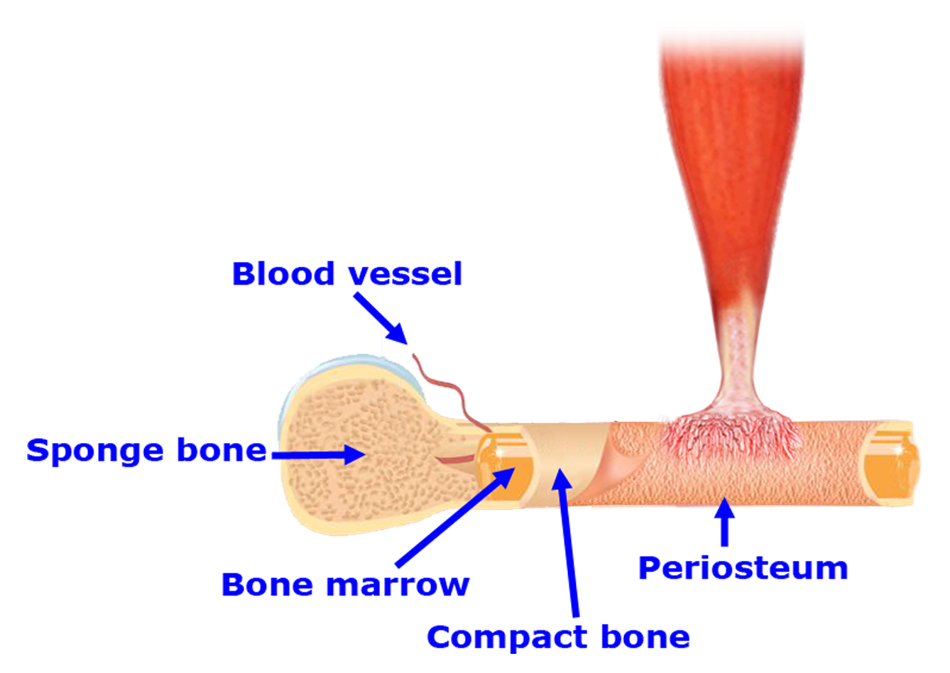
Periosteum: The periosteum is a dense highly innervated membrane composed of fibrous connective tissue that closely wraps (invests) all bone, except that of the articulating surfaces in joints which are covered by a synovial membrane.
The periosteum is the most densely innervated, followed by bone marrow and cortex. It is important to recognize and respect the sensitivity of this membrane. It may well be the most sensitive component in the body.
For more information: Sensory Innervation of Human Bone
"Peri-" is a prefix borrowed from the Greek meaning "around or about" and "-osteum" also comes from the Greek, from "osteon" meaning "bone", so periosteum literally means "around the bone."
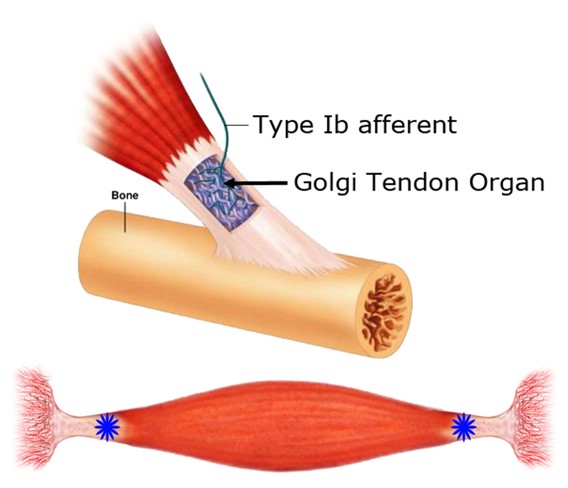
Golgi Tendon Organ (GTO): A spindle-shaped structure near the muscular/tendinous junction. This structure is thought to function as a feedback system that monitors muscle tension, inhibits muscle contraction of the agonist, and facilitates contraction of the antagonistic muscle. The purpose of this mechanism is to prevent overuse and damage to the muscle and involved joint.

Additional resources for anatomical clarity:


